Published August 25, 2026
If someone asks me what Victoria is known for, the easy answer is gardens, the Inner Harbour and the Parliament Buildings. Those are all part of it, but they leave out a lot of what gives Victoria its personality.
I was born and raised here, and the things I associate with Victoria are a mix of famous landmarks and everyday details: ocean views at the end of an ordinary street, older neighbourhoods with mature gardens, ferries and floatplanes in the harbour, Canada’s oldest Chinatown, Beacon Hill Park, Mile 0, coffee shops, beaches and the fact that you can walk from downtown to the ocean without making a whole day of it.
- the Inner Harbour and B.C. Parliament Buildings
- being the capital of British Columbia
- gardens and the Garden City nickname
- Butchart Gardens on the Saanich Peninsula
- Canada’s oldest surviving Chinatown
- oceanfront parks, beaches and waterfront walks
- Mile 0 and the Terry Fox memorial
- a mild coastal climate by Canadian standards
- historic neighbourhoods, local village centres and a compact downtown
1. The Inner Harbour
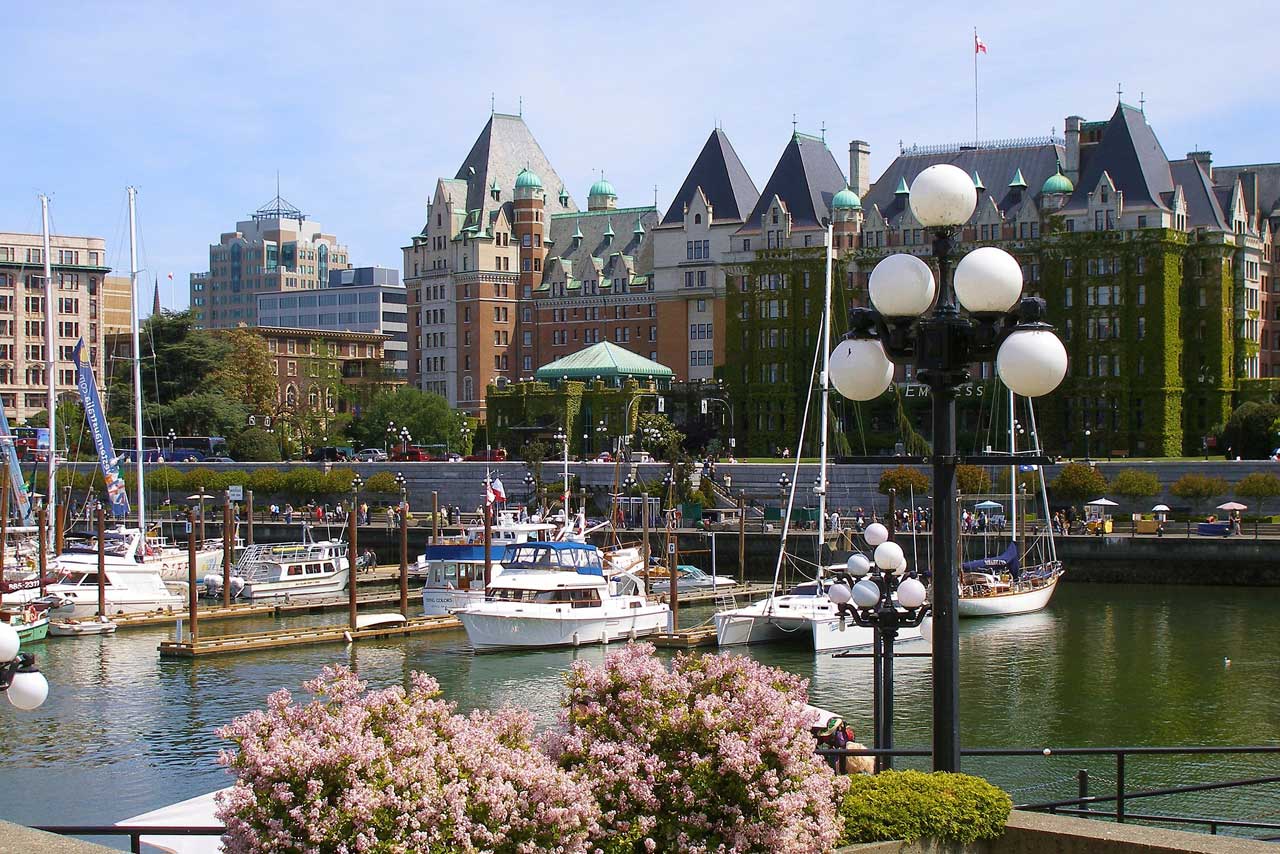
The Inner Harbour is probably the image most people have in mind before their first trip to Victoria. The B.C. Parliament Buildings sit on one side, the Fairmont Empress is nearby, and the water is busy with harbour ferries, seaplanes and boats.
What I like about it is how close everything is. You can walk the lower causeway, cross into James Bay, head toward Fisherman’s Wharf, continue through downtown or keep going toward Beacon Hill Park. It isn’t a separate waterfront district that you have to drive to. It sits right against the centre of the city.
Destination Greater Victoria describes the Inner Harbour as being between downtown, James Bay and Vic West. That geography is worth noticing if you’re here because you may move someday. It shows how close several very different neighbourhoods are to the centre.
See current Inner Harbour information from Destination Greater Victoria.
2. Being the Capital of British Columbia
Victoria is the provincial capital, which surprises some visitors who assume Vancouver is the capital because it’s much larger. Victoria was named the capital in 1868, and the current Parliament Buildings opened in 1898.
The buildings are more than a photo backdrop. They’re the home of the Legislative Assembly of British Columbia, and the grounds are part of everyday downtown Victoria. People walk through on their way to work, sit on the lawns, attend public events and watch the buildings light up at night.
If you have time, the Legislature offers public tours and other ways to visit the building. The current schedule changes through the year, so I’d check it directly rather than relying on an old timetable.
Check current visiting information from the Legislative Assembly of British Columbia.
3. Gardens and the Garden City Name
Victoria’s Garden City nickname is one of the city’s oldest associations. The mild coastal climate and long growing season help, but I think the name makes more sense when you walk residential streets than when you read it on a tourism brochure.
Older parts of Fairfield, Rockland, James Bay and Oak Bay have mature trees, hedges, rhododendrons and front gardens that have been growing for decades. Downtown flower baskets are another familiar summer sight. Beacon Hill Park, Government House and smaller gardens add to it.
I have a separate page on why Victoria is called the Garden City and another on flower gardens around Greater Victoria if that’s the part of the city you’re most curious about.
4. Butchart Gardens
Butchart Gardens is not in downtown Victoria. It’s in Brentwood Bay on the Saanich Peninsula, but it has been connected with Victoria tourism for generations and is one of the best-known attractions in the region.
I think it’s useful to keep the geography straight. A visit to Butchart can also be a reason to see Central Saanich, Brentwood Bay and some of the rural side of Greater Victoria. If you’re scouting a future move, that makes the trip more useful than simply driving to the garden and straight back downtown.
My Butchart Gardens page covers the location, seasons, walking time and a few ideas for seeing more of the Peninsula on the same day.
5. Chinatown, Fan Tan Alley and Old Town
Victoria is home to Canada’s oldest surviving Chinatown. The City’s heritage material recognizes it as a National Historic Site and notes its long role in Chinese Canadian commercial, social and community life.
Fan Tan Alley gets most of the photographs because it’s narrow and unusual, but Chinatown is much more than one alley. Fisgard Street, the Gate of Harmonious Interest, long-running community organizations, heritage buildings and the network of old passageways all tell a larger story.
Nearby Old Town adds Market Square, brick warehouses, older commercial buildings and small alleys. I’d walk this part of downtown rather than drive it. Several of the places on my Victoria hidden gems page are in or near this area.
See the City of Victoria’s current downtown guide.
6. The Ocean Is Part of Everyday Life
Victoria sits at the southern end of Vancouver Island, and the water shapes the city in a way that’s hard to miss. Dallas Road follows the Strait of Juan de Fuca, Oak Bay has a long rocky shoreline, and beaches appear in residential neighbourhoods rather than only at resort areas.
The beaches here aren’t all big sandy swimming beaches. Some are rocky, cold and windy, which is part of the reality of living on the coast. Willows Beach and Cadboro Bay feel very different from Clover Point, Spiral Beach or parts of Dallas Road.
If the coast is one of the reasons you’re interested in Victoria, my Victoria beaches guide and waterfront walks page show several different sides of it.
7. Mile 0 and Terry Fox
Mile 0 at Dallas Road is another Victoria landmark that has a bigger story behind it. It marks the western end of the Trans-Canada Highway, and the nearby Terry Fox memorial recognizes Victoria as the intended finish of his Marathon of Hope.
I’ve lived here all my life and still think it’s one of the most meaningful public spots in the city. It also happens to be in a good location for seeing more of Victoria: Beacon Hill Park is beside it, Dallas Road runs along the water and James Bay is close by.
My Terry Fox and Mile 0 page goes into the story and shows what else is within walking distance.
8. A Mild Coastal Climate
Victoria is known for having a mild climate by Canadian standards. That doesn’t mean endless summer. Winters can be wet, grey and windy, and homes still need heat. What is different is that long stretches of extreme cold and deep snow are much less common than they are in many Canadian cities.
The climate affects more than gardens. People walk, cycle and use parks through much of the year. Snow events tend to stand out because they’re less routine. The City describes Victoria as having Canada’s most temperate climate, but if you’re thinking of moving here, I’d pay just as much attention to the dark, damp winter days as the summer weather.
Read the City of Victoria’s overview of the region.
9. Walkable Waterfronts and a Compact Centre
Central Victoria is fairly compact. From the Inner Harbour you can walk into James Bay, downtown, Chinatown or Beacon Hill Park without needing a car. The Songhees side of the harbour has its own waterfront route, and Dallas Road gives you a much longer ocean walk.
That doesn’t mean all of Greater Victoria is walkable. Saanich, the West Shore and the Peninsula cover much larger areas, and many daily trips are easier by car or transit. Still, the ability to combine downtown errands with waterfront walks is one of the things that feels distinctly Victoria to me.
If you want to see the city on foot, start with my best waterfront walks in Victoria.
10. Neighbourhood Villages
Victoria is also known locally for its small neighbourhood centres. Cook Street Village, Oak Bay Village, Fernwood, James Bay and parts of Fairfield each have shops, cafés and services that give them a different feel from downtown.
This matters more if you’re considering a move than if you’re visiting for a weekend. Two homes can be only a few kilometres apart but have completely different walking routes, traffic patterns and nearby services.
I’d use my Greater Victoria neighbourhoods page as a starting point, then spend time in the areas that actually fit your budget and routine.
11. Parks, Beaches and Outdoor Space Close to Home
Beacon Hill Park gets the most attention, but Greater Victoria has a large network of neighbourhood parks, playgrounds, waterfront access points and regional trails. Some are destination parks. Others are simply where people walk a dog, take kids after school or eat lunch on a bench.
That mix is more important to me than one famous park. If you’re visiting with children, the parks and playgrounds page gives you a useful spread across Victoria, Saanich, Oak Bay, Esquimalt and the West Shore.
12. Local Markets, Coffee and Food Stops
Victoria has a strong local-food and coffee culture, but I don’t think you need to chase every new restaurant to understand it. Farmers markets, independent bakeries, coffee roasters, neighbourhood cafés and Peninsula farm shops are a better way to see how food fits into everyday life here.
If you’re visiting before moving, I like using an ordinary food stop as an excuse to spend time in a neighbourhood. My local food, farm shops and coffee page is set up that way.
What Victoria Is Known For Isn’t the Same as What Living Here Is Like
The Parliament Buildings, Butchart Gardens and Inner Harbour are real parts of Victoria, but they’re not daily life for most people. Living here is also grocery runs, school drop-offs, traffic on the Trans-Canada Highway, rainy November afternoons, ferry reservations, finding parking and deciding how far you want to live from work.
That’s why I built this site with both visitor pages and moving pages. If Victoria interests you because of the gardens, coastline or history, enjoy those things. Then spend a little time doing something ordinary in the neighbourhoods you might actually live in.
Thinking about moving to Victoria?
If this page is your introduction to the city, the next useful step is to look past the landmarks and compare the areas where people actually live.